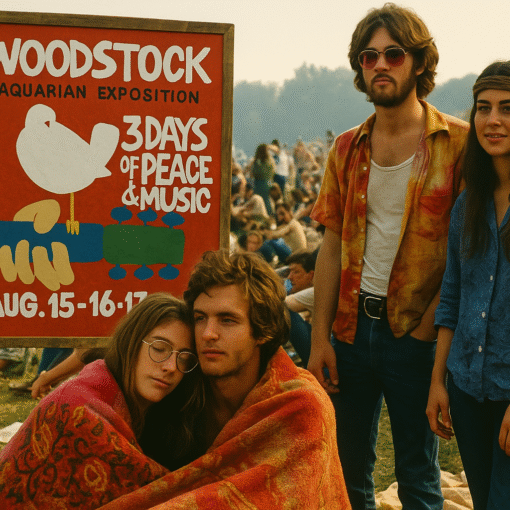
The year 1969 stands as a monumental period in the history of rock music, marking a convergence of diverse musical influences, technological advancements, and profound cultural shifts. This era witnessed the emergence of pioneering bands, the infusion of social and political themes into lyrics, groundbreaking studio innovations, and performances that would set the stage for future generations.
The Dawn of a New Sound
In 1969, rock music stood at a critical crossroads—evolving rapidly from its early roots and branching into bold, uncharted territories. The late 1960s served as a melting pot for diverse musical influences, with genres like blues, jazz, folk, and psychedelia converging to form entirely new soundscapes. This era marked the dawn of a heavier, more aggressive style of rock that would ultimately lay the foundation for heavy metal and hard rock.
The release of Led Zeppelin I in January 1969 was a watershed moment. Combining raw blues riffs, soaring vocals, and groundbreaking production techniques, the album signaled the arrival of a band unafraid to challenge norms. By the time Led Zeppelin II landed in October, the band had already cemented its status as a sonic force. Tracks like “Whole Lotta Love” and “Heartbreaker” introduced layered guitar solos and a level of intensity that was unprecedented for the time. Meanwhile, Deep Purple—another cornerstone of British rock—began shifting from their psychedelic origins to a harder-edged style that would culminate in 1970’s In Rock, further propelling the genre forward.
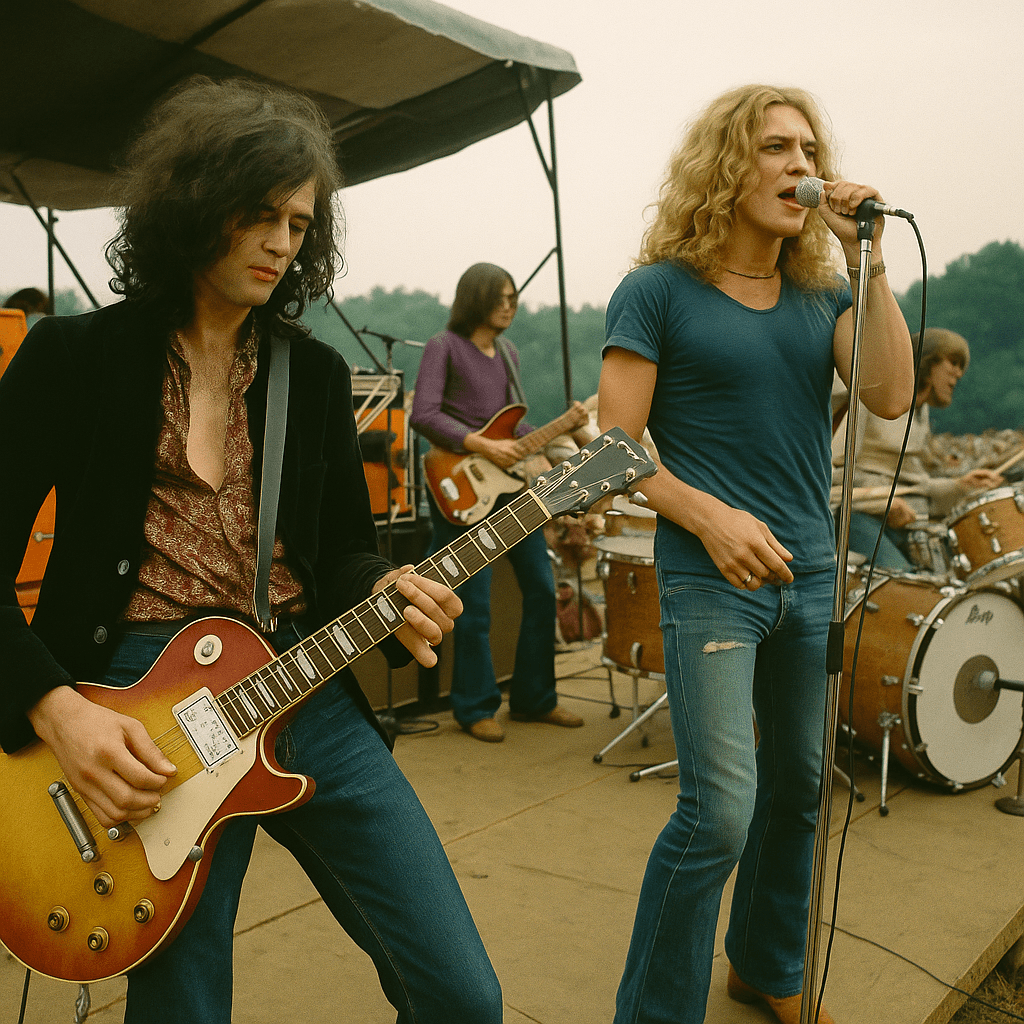
The music festivals of 1969 were equally transformative. Woodstock, held in August of that year, wasn’t just a concert—it was a cultural phenomenon. More than 400,000 people gathered to experience a musical lineup that included Janis Joplin, The Who, Santana, and of course, Jimi Hendrix. Hendrix’s distorted, improvisational take on “The Star-Spangled Banner” became an emblem of political defiance and sonic innovation.
Rock music also splintered into subgenres: progressive rock with bands like King Crimson, folk-rock through Crosby, Stills & Nash, and the continuing psychedelic journeys of Pink Floyd. These developments reflected not only musical creativity but also a generation’s desire to experiment, explore, and express. In short, 1969 wasn’t just a year—it was the beginning of a rock revolution.
Cultural and Social Influences on Lyrics and Themes
The year 1969 was marked by immense cultural and political turbulence, and rock music became a powerful mirror reflecting the unrest and hopes of a generation. As the Vietnam War escalated, civil rights battles continued, and youth counterculture flourished, musicians responded with lyrics that channeled protest, disillusionment, and calls for change. Rock evolved from mere entertainment into a platform for activism and emotional catharsis.
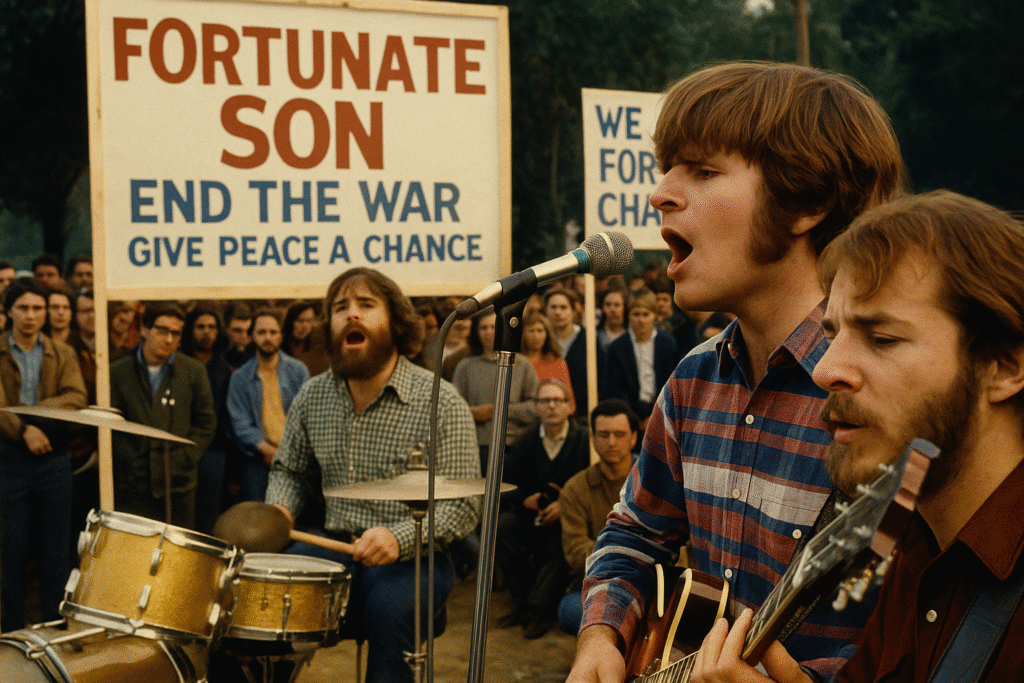
Creedence Clearwater Revival’s searing protest song “Fortunate Son,” released in September of that year, captured the nation’s deepening cynicism toward government and military inequality. The track resonated as a raw critique of class-based injustices, particularly the fact that the wealthy and well-connected often dodged the draft while working-class men bore the brunt of combat. This sentiment was echoed in countless college campuses and anti-war demonstrations, solidifying the track as an enduring anti-establishment anthem.
Meanwhile, Jefferson Airplane’s “We Can Be Together” fused psychedelia with radical political ideology. With lyrics like “We are forces of chaos and anarchy,” the song gave voice to the rebellious energy of the New Left and Black Power movements. Bands no longer just entertained—they sparked conversation, channeled outrage, and inspired solidarity.
The influence of the counterculture extended into the very sound and appearance of rock. The Stooges, fronted by the feral Iggy Pop, pushed the boundaries of performance art and sound, laying the groundwork for punk rock’s rise in the following decade. Their gritty aesthetic and primal energy reflected a generation’s rejection of polished conformity.
Even more nuanced reflections came from bands like The Band, whose self-titled album offered a historical and emotional look at America’s fractured identity. Songs like “The Night They Drove Old Dixie Down” invited introspection about heritage, conflict, and collective memory.
By 1969, rock had become a vehicle for emotional truth and social critique, setting a new precedent for musicians as cultural commentators and change-makers.
Technology: Transforming Studio Recording and Live Performances
In 1969, rock music’s evolution was not only artistic but also technological. A new wave of innovation in recording and live performance equipment transformed how artists created and shared their music, elevating the genre’s complexity and reach. These advancements laid the groundwork for the modern music production industry and allowed artists to push creative boundaries in ways previously unimaginable.
The introduction and refinement of multitrack recording was among the most significant breakthroughs of the decade. With this technology, artists were no longer confined to live, single-take recordings. Instead, they could layer instruments and vocals individually, experiment with effects, and build richer, more nuanced compositions. This opened the door to intricate sound design and greater artistic freedom.
Studios such as Sound City, which opened its doors in 1969, became havens for innovation. Equipped with cutting-edge analog consoles and tape machines, these studios attracted some of the most ambitious rock acts of the era. Magnetic tape recording not only offered higher fidelity but also allowed producers to splice, overdub, and manipulate tracks with newfound precision. The studio was no longer just a place to capture music—it became an instrument in itself.
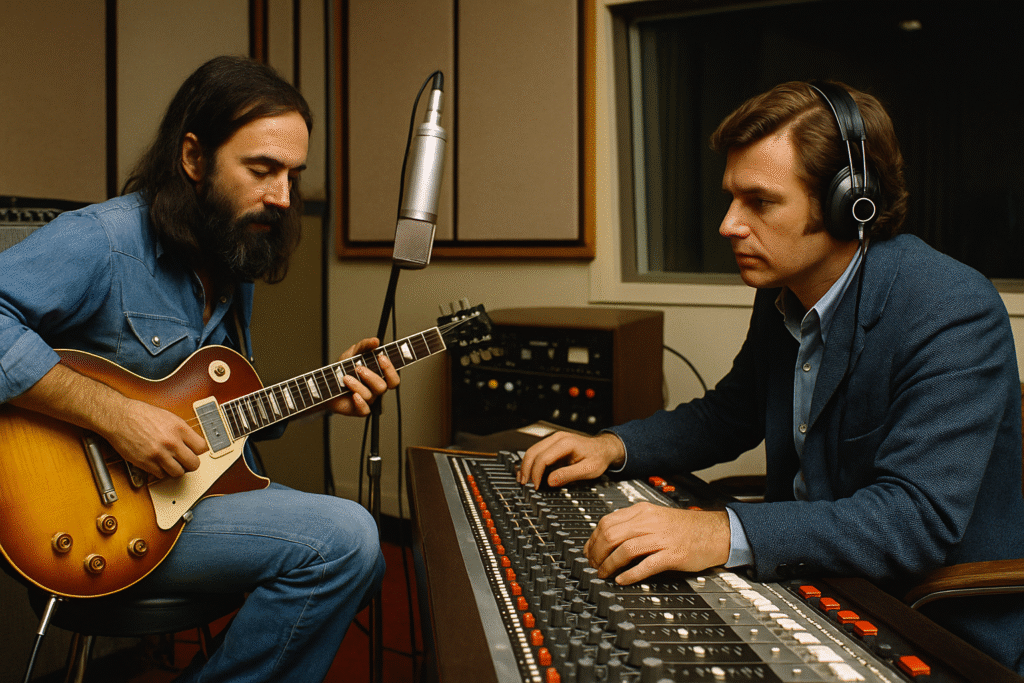
Technological strides also transformed the live music experience. Advances in amplification, PA systems, and monitor mixing meant that bands could perform for larger audiences without sacrificing sound quality. Iconic festivals like Woodstock in August 1969 showcased these improvements, with towering speaker arrays and extensive stage setups that delivered rock’s raw energy to hundreds of thousands.
Televised performances played a pivotal role in spreading rock music’s appeal. Acts like The Beatles and The Rolling Stones captivated home audiences with carefully engineered TV appearances, helping to solidify their global status.
Perhaps no album better encapsulated the year’s studio potential than The Beatles’ Abbey Road. Utilizing stereo panning, early synthesizers like the Moog, and complex vocal layering, the album set a new benchmark for production value and creativity in rock. By the close of 1969, technology had become as integral to rock music’s identity as the guitar itself—amplifying not only sound, but influence.
The Legacy of 1969 Rock: Long-Lasting Impact
The innovations and cultural shifts that defined rock music in 1969 forged a legacy that continues to shape the genre and the wider music industry. This pivotal year served as a launching pad for new subgenres, inspired generations of artists, and introduced creative approaches to both performance and production that remain influential more than five decades later.
Musically, 1969 marked the crystallization of sounds that would later evolve into heavy metal, punk, progressive rock, and alternative music. The aggressive riffs of Led Zeppelin II, the genre-defining ballads of The Band, and the boundary-pushing production on Abbey Road set new artistic standards. These albums weren’t just commercial successes; they were milestones in the art of album-making, emphasizing conceptual unity, sonic experimentation, and lyrical depth.
The year also helped solidify the idea of music as a tool for cultural and political discourse. Rock artists in 1969 were no longer just entertainers—they were commentators, provocateurs, and sometimes even revolutionaries. The willingness to confront issues like war, racism, inequality, and youth alienation embedded a spirit of activism into the DNA of rock. This tradition lives on in the protest anthems, politically charged lyrics, and socially conscious movements supported by contemporary artists.
Technologically, the emphasis on studio craftsmanship and high-quality audio engineering introduced in 1969 continues to influence modern recording standards. Multitrack recording, stereo imaging, and synthesized instrumentation—all widely adopted that year—became essential tools for future music producers and sound designers.
Moreover, 1969’s rock culture laid the blueprint for the modern music festival experience, as seen in Woodstock’s legacy. Today’s large-scale festivals still echo the spirit of unity, experimentation, and cultural awareness born from that era.
In retrospect, 1969 wasn’t merely a high point in rock’s golden age—it was a defining moment. It proved that rock music could evolve, inspire, and endure. And as today’s musicians revisit, remix, and revive the sounds of that landmark year, the spirit of 1969 continues to amplify across generations.
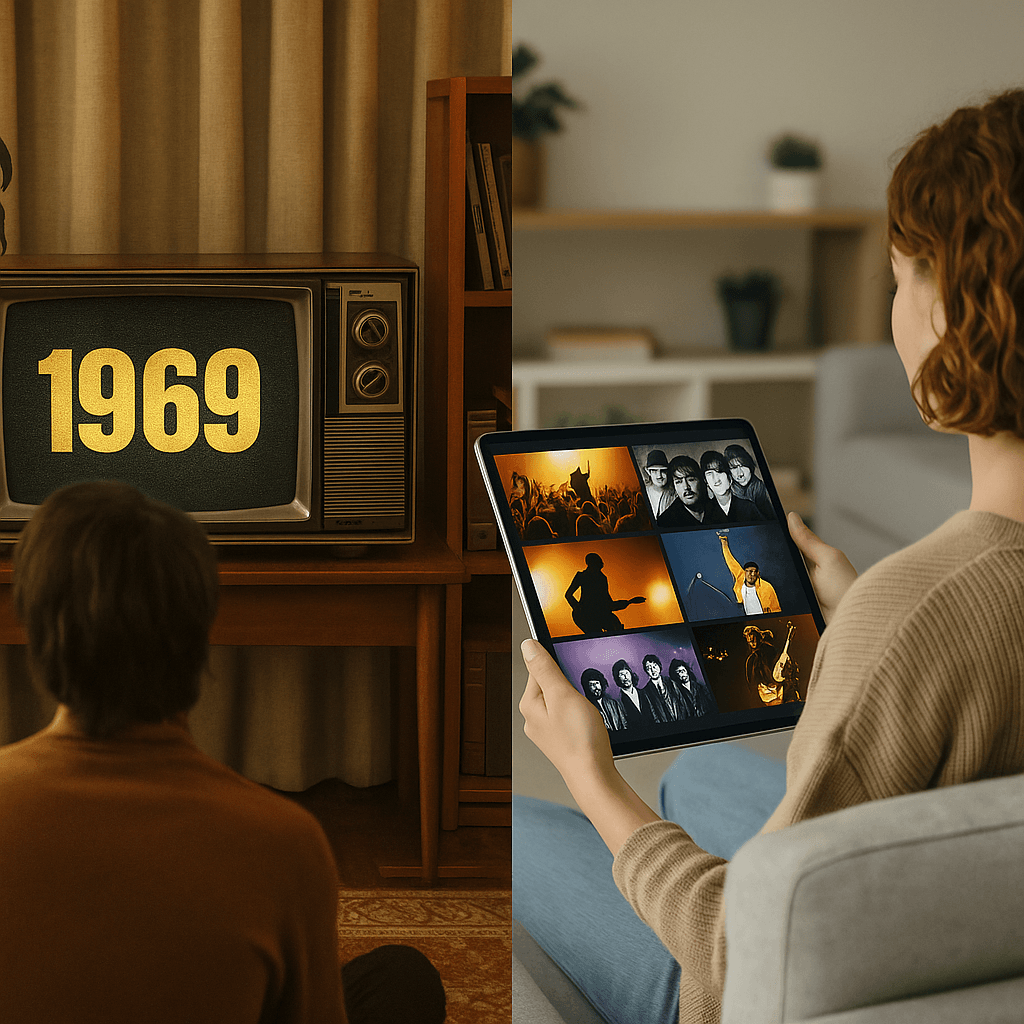
🎸 What’s Your Rock Memory from ’69?
Whether you played the vinyl, saw it live, or discovered it decades later—rock music in 1969 left a mark. Drop your favorite album, band, or moment in the comments below and let’s celebrate this golden year together.
📚 Read the Review: 1969 – The Year Everything Changed