The Vietnam War was one of the most defining and divisive conflicts of the 20th century, not only as a military engagement but as a political crucible that reshaped international relations, domestic governance, and public discourse. A study of this conflict is as much about geopolitics as it is about ideology, power, and public accountability. This article explores the Vietnam War through a political lens—analyzing its origins, decision-making processes, global consequences, and the enduring legacy it imprinted on nations and generations.
Origins and Escalation: Setting the Stage for Conflict
The roots of the Vietnam War are entangled in the post-World War II geopolitical transformation of Southeast Asia, where colonial empires were crumbling and new power dynamics emerged. As France struggled to retain control of its colonial holdings, Vietnamese nationalism, galvanized by Ho Chi Minh and the Viet Minh, sought independence. This friction culminated in the First Indochina War (1946–1954) between French colonial forces and the nationalist-communist coalition.
Amidst this upheaval, Cold War dynamics played an instrumental role. The United States, seeing the spread of communism as an existential threat, aligned its foreign policy around the “domino theory,” fearing that if Vietnam fell, neighboring countries would follow. Meanwhile, the USSR and China saw an opportunity to expand their ideological influence by backing Ho Chi Minh’s forces.
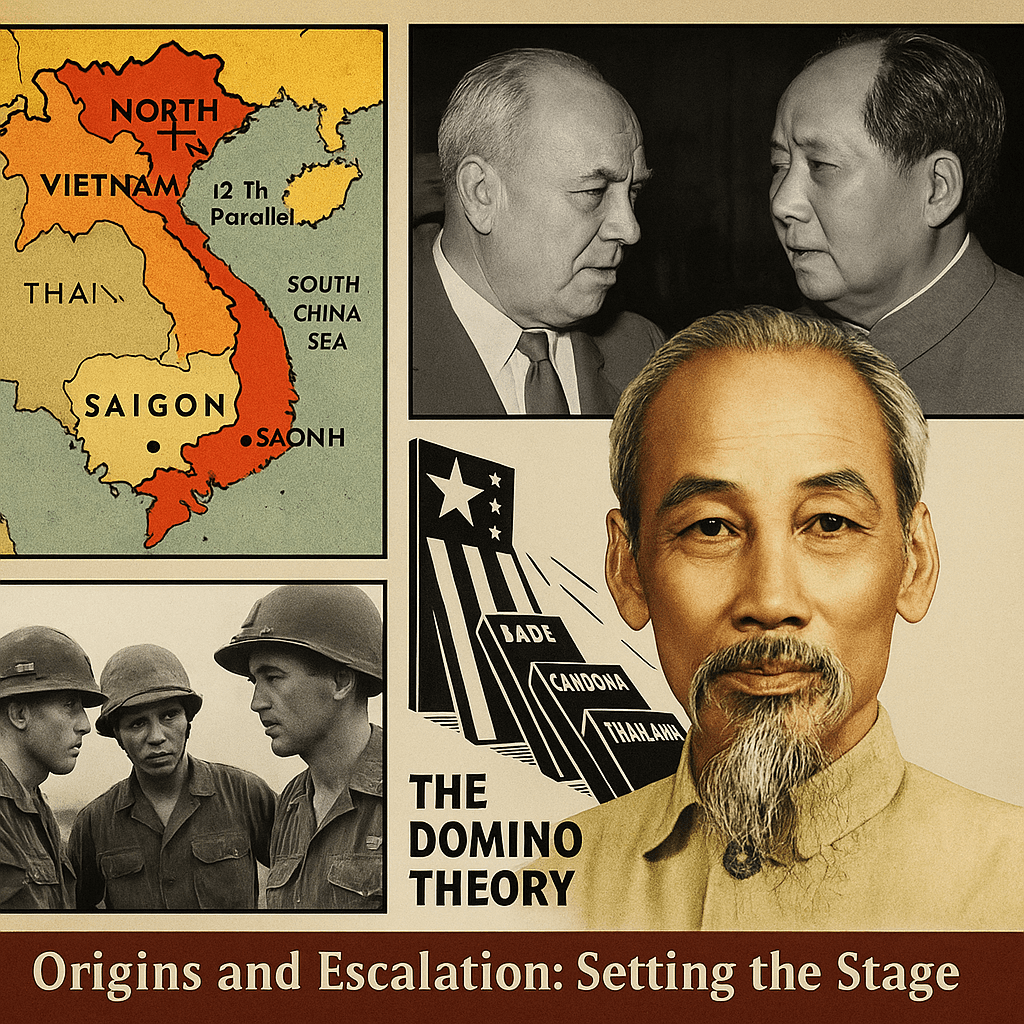
The Geneva Accords of 1954 marked a pivotal moment: they temporarily divided Vietnam at the 17th parallel, with Ho Chi Minh’s communist government controlling the north and Ngo Dinh Diem’s U.S.-backed regime governing the south. Though intended as a temporary arrangement leading to national elections in 1956, the elections never took place. This failure sowed the seeds for full-scale conflict.
Initially, U.S. involvement was limited to providing military advisors to assist South Vietnamese forces. However, by the early 1960s, tensions escalated. The Gulf of Tonkin incident in 1964, in which U.S. naval vessels were reportedly attacked by North Vietnamese forces, provided the political justification for the Gulf of Tonkin Resolution, granting President Lyndon B. Johnson authority to escalate U.S. military involvement. This marked a turning point, transitioning the conflict from regional insurgency to a major Cold War battleground.
The Political Landscape: Decision-Making Amidst Conflict
The Vietnam War tested the political resilience and ideological clarity of multiple U.S. administrations, each grappling with conflicting intelligence, divided public sentiment, and evolving military realities. President Dwight D. Eisenhower initially framed the U.S. commitment to Vietnam as essential to containing communism, laying the ideological groundwork for future engagement.
John F. Kennedy, inheriting a fragile situation, expanded the number of U.S. military advisors while maintaining a degree of strategic ambiguity. His assassination in 1963 passed a complex and deteriorating conflict to Lyndon B. Johnson, under whom full-scale military involvement exploded. Johnson, balancing the pressures of the Cold War with his domestic “Great Society” initiatives, found himself politically trapped. While he feared appearing weak on communism, public discontent over rising American casualties and unclear military objectives grew louder.
The war’s deeply polarizing effect on U.S. society catalyzed a robust anti-war movement. Sparked initially by university students and peace activists, the protests gained mainstream momentum after events like the Tet Offensive in 1968, which contradicted government claims of progress. Televised coverage of the conflict, including scenes of bombings and civilian casualties, further eroded public support. The rise of the phrase “credibility gap” symbolized the public’s growing mistrust in government narratives.
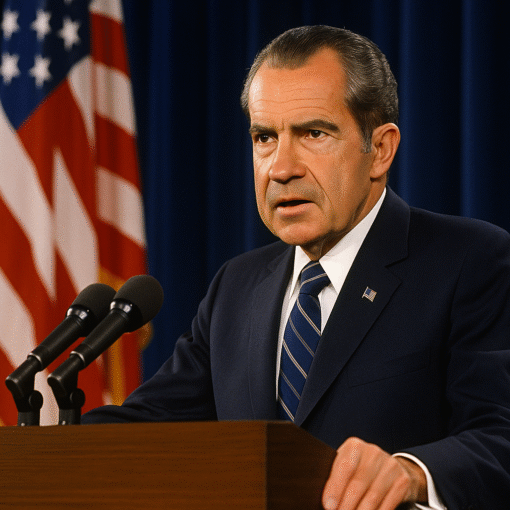
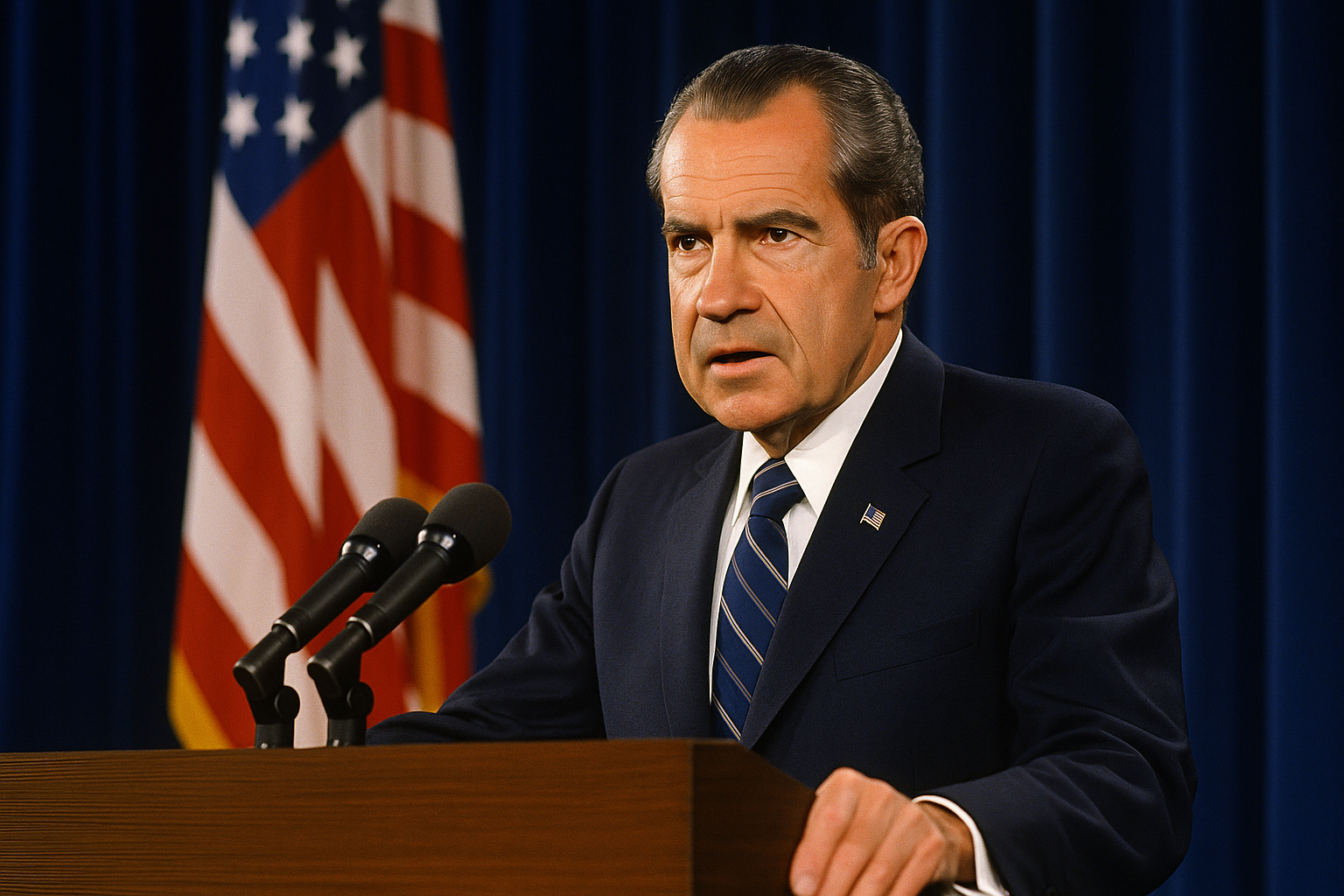
President Richard Nixon, elected in 1968 on a promise to achieve “peace with honor,” introduced the strategy of Vietnamization—gradually withdrawing U.S. troops and transferring combat roles to the South Vietnamese. However, his administration’s expansion of the war into Cambodia and Laos and the Pentagon Papers leak in 1971 further exposed the internal contradictions and misrepresentations behind U.S. involvement.
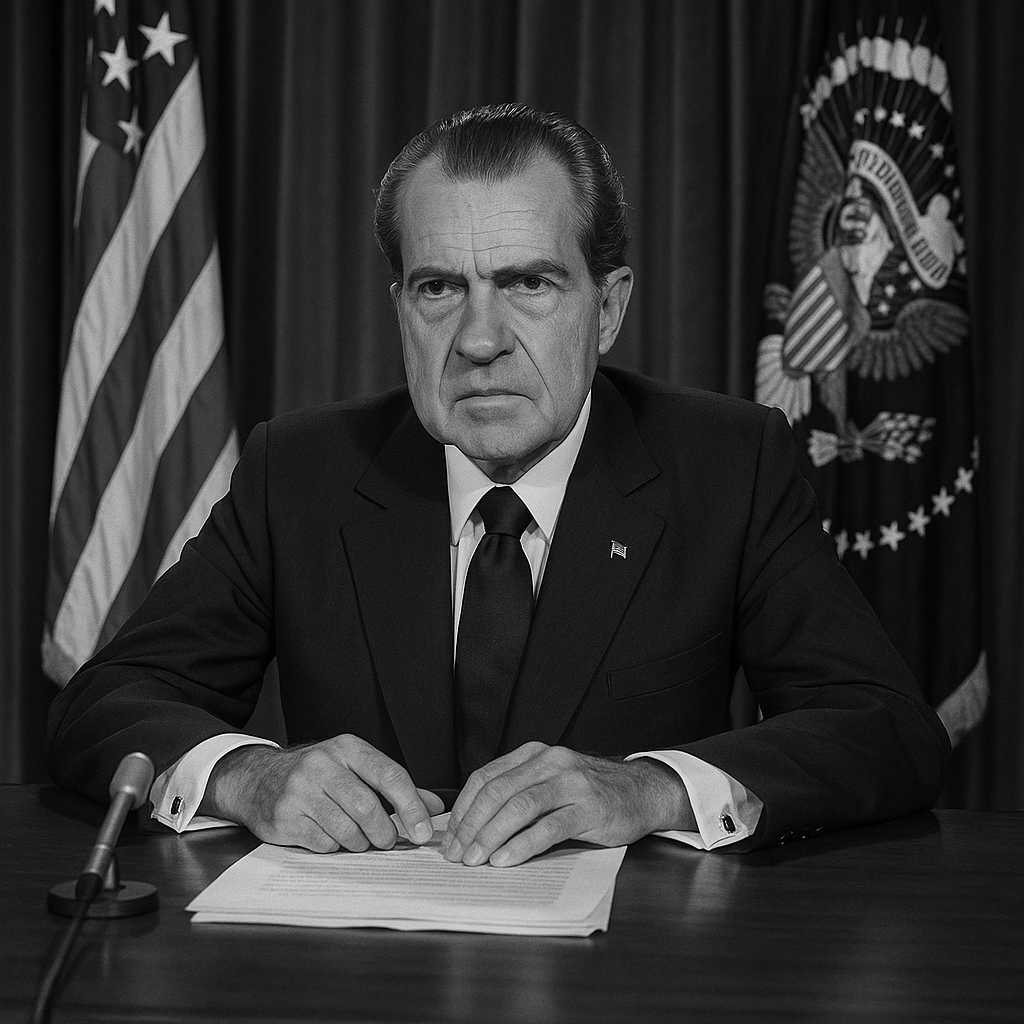
Throughout the conflict, policymakers were caught in a clash between military objectives and political realities. Conflicting advice from the Pentagon, State Department, and intelligence agencies compounded the challenge. At the heart of it all was a fundamental disconnect: while the military sought victory, political leaders feared the domestic and international consequences of escalation or defeat.
International Repercussions: Diplomacy and Global Relations
Beyond its immediate geography, the Vietnam War reverberated across the global political landscape. It served as a proxy conflict within the broader ideological struggle between the United States and the Soviet Union. Vietnam became a testing ground not only for military might but for the efficacy of divergent political ideologies—capitalism and democracy versus communism and authoritarianism.
Through alliances like SEATO (Southeast Asia Treaty Organization), the U.S. sought to build a coalition of support, though in reality, few members contributed substantively to the war effort. Conversely, China and the USSR provided critical logistical and military support to North Vietnam, complicating diplomatic avenues and heightening global tensions.
The war’s consequences also spilled over into neighboring countries, such as Cambodia and Laos, which became collateral damage in the effort to disrupt the Ho Chi Minh Trail, a critical North Vietnamese supply route. The secret bombings and subsequent destabilization of Cambodia contributed to the rise of the Khmer Rouge, whose genocidal regime emerged in the power vacuum left by U.S. withdrawal and regional chaos.
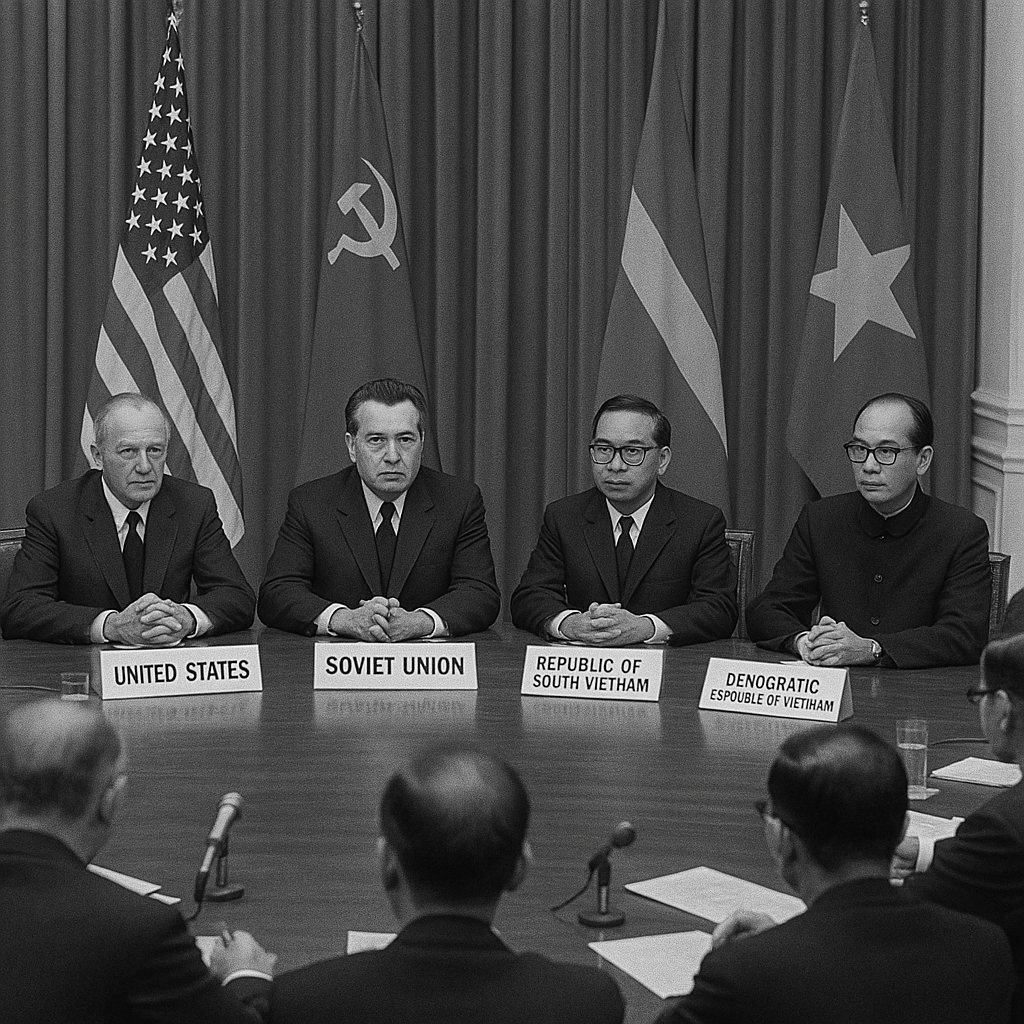
Efforts at peace culminated in the Paris Peace Accords of 1973, brokered with great difficulty by Henry Kissinger and Le Duc Tho. While the agreement led to a ceasefire and U.S. troop withdrawal, it failed to establish lasting peace. Within two years, the fall of Saigon marked the end of the Republic of Vietnam and the victory of the communist North—a sobering reflection of the war’s intractable complexities.
In the broader context of U.S. foreign policy, Vietnam cast a long shadow. It gave rise to the “Vietnam Syndrome”—a reluctance to engage in overseas military interventions without clear objectives, public support, and exit strategies. This recalibration influenced U.S. actions in subsequent conflicts, from Grenada to the Gulf War, and continues to shape strategic doctrine to this day.
Legacy and Lessons: Political Reflections Post-Vietnam War
The Vietnam War’s conclusion did not mark an end to its consequences. The post-war transition involved rebuilding diplomatic ties, addressing humanitarian crises, and attempting national healing. For the U.S., reconciling with a lost war—something virtually unprecedented in modern history—proved deeply complex. Meanwhile, Vietnam embarked on a slow path toward economic reform (Đổi Mới) and diplomatic normalization, culminating in the re-establishment of U.S.–Vietnam relations in the 1990s.
One of the most pressing political concerns post-war was the treatment and reintegration of veterans. Many returned home not to celebration, but to indifference or even hostility. The lack of a clear victory, coupled with the war’s controversy, led to significant psychological, medical, and socioeconomic challenges for veterans. It wasn’t until years later that comprehensive programs began addressing PTSD, Agent Orange exposure, and homelessness among this group—an indictment of the initial political negligence.
The Vietnam War became a cautionary tale—its lessons deeply analyzed in military academies, policy circles, and political discourse. It taught the dangers of mission creep, lack of cultural understanding, and the hazards of politicizing intelligence. For democratic societies, it underscored the importance of transparent governance, media accountability, and citizen engagement in foreign policy decisions.
The war also reshaped how nations memorialize conflict. In Washington, D.C., the Vietnam Veterans Memorial, designed by Maya Lin, became a focal point for remembrance and reflection. It eschewed triumphalism in favor of a somber acknowledgment of sacrifice—a subtle yet powerful political statement. Similarly, in Vietnam, memorials and museums tell a narrative of resistance and national unity, revealing how war memory is curated through the lens of politics.
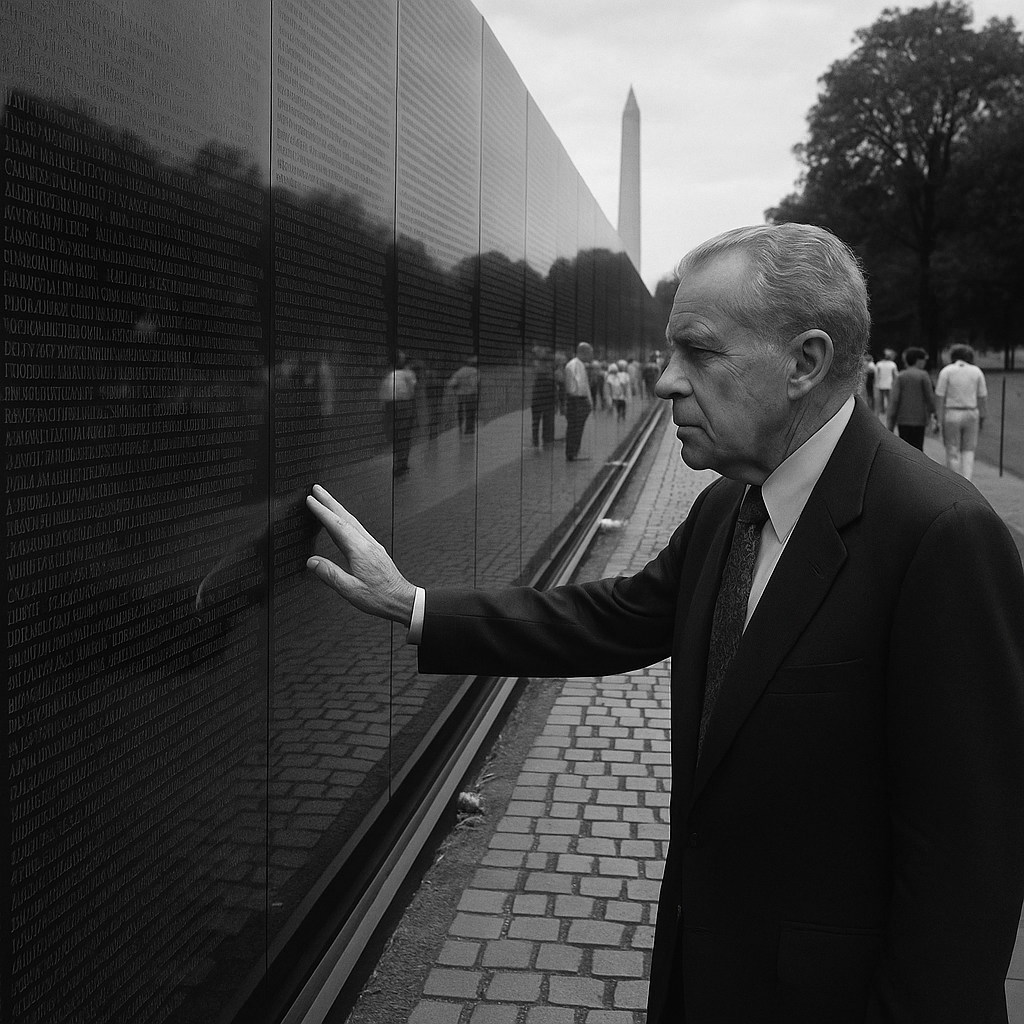
In education, film, literature, and journalism, the Vietnam War remains an enduring subject—reminding future generations of the perils of ideological rigidity, political miscalculation, and the human cost of armed conflict. It continues to influence everything from defense budgets and veterans’ policies to discussions on war powers and executive authority.
Conclusion: A Political Reckoning That Continues to Resonate
The Vietnam War was never just a battlefield confrontation—it was a global, political, and cultural upheaval. It challenged superpowers, fractured domestic consensus, and transformed diplomatic strategy. The conflict highlighted the tension between idealism and pragmatism, secrecy and accountability, nationalism and imperialism.
Today, its legacy endures in the debates we hold about intervention, diplomacy, and the role of government in shaping public understanding of conflict. It serves as a reminder that war is not merely won or lost through weaponry or territory, but through the strength, clarity, and integrity of political decision-making.
Keep Exploring the Legacy of 1969
Interested in the stories, struggles, and seismic shifts that shaped a generation? Dive deeper with our featured book: “1969 – The Year Everything Changed” by Rob Kirkpatrick — a compelling chronicle of a world in flux.
📖 Read the Review