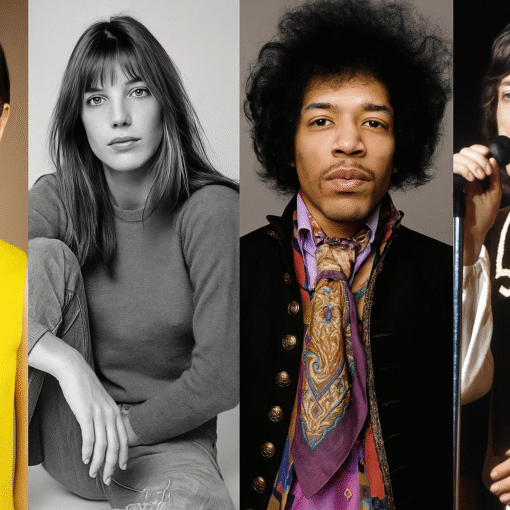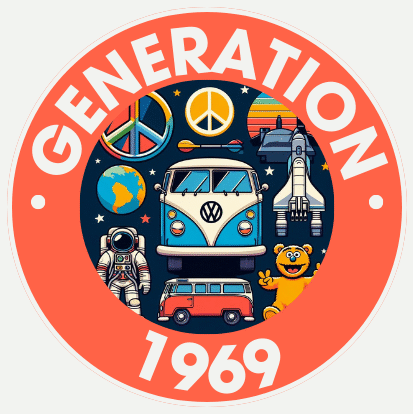
The year 1969 wasn’t just a historical landmark politically and socially—it was also a groundbreaking year for personal expression through fashion, music, and hair. Hairstyles, in particular, became more than beauty statements; they evolved into bold declarations of identity, rebellion, and cultural belonging. As society shifted away from rigid norms and embraced liberation and experimentation, so too did its hair. From sky-high beehives to free-flowing locks, 1969 witnessed a transformation that still influences trends today. Let’s take a journey through the evolution of 1969 hairstyles and explore how they reflected—and shaped—a changing world.
Introduction to 1969: A Pivotal Year in Fashion and Hair
To understand the hairstyles of 1969, one must first grasp the cultural climate that shaped them. The world was in flux. The Vietnam War sparked mass protests, the civil rights movement was pressing forward, the counterculture was thriving, and a generation of young people was questioning authority in ways never seen before. Against this backdrop of change, personal style became a powerful tool of expression.
The fashion of 1969 was already veering from the buttoned-up silhouettes of earlier decades into bolder, freer styles. The same was true of hair. No longer constrained by conservative grooming expectations, people—especially the youth—began to break away from tradition. The decade’s end brought an explosion of styles: some retained remnants of formality, while others openly rejected conformity.
Women no longer felt obligated to maintain highly structured, controlled hairstyles. Instead, natural texture, asymmetry, and volume were embraced. Meanwhile, men shifted away from the polished looks of the ’50s, and longer, looser hairstyles became symbols of rebellion and individualism.
This hairstyling revolution wasn’t driven purely by aesthetics—it reflected the era’s broader themes: freedom, identity, activism, and self-expression.
Iconic Hairstyles that Defined 1969
Hairstyles in 1969 were as diverse as the voices that defined the decade. From the glamorous to the avant-garde, each look carried cultural significance and aesthetic power.
One of the standout styles of the era was the beehive. Though it had its roots earlier in the ’60s, the beehive remained a staple into 1969, worn by women who favored height, volume, and classic glamour. This look, immortalized by singers like Dusty Springfield, was elegant and commanding, making it a favorite among performers and fashionistas alike.
Another defining style was the mod bob—a sharp, chin-length cut often paired with dramatic eyeliner and bold accessories. Popularized by British model and style icon Twiggy, the mod bob represented youth, urban sophistication, and the streamlined modernism of the “Swinging London” scene.
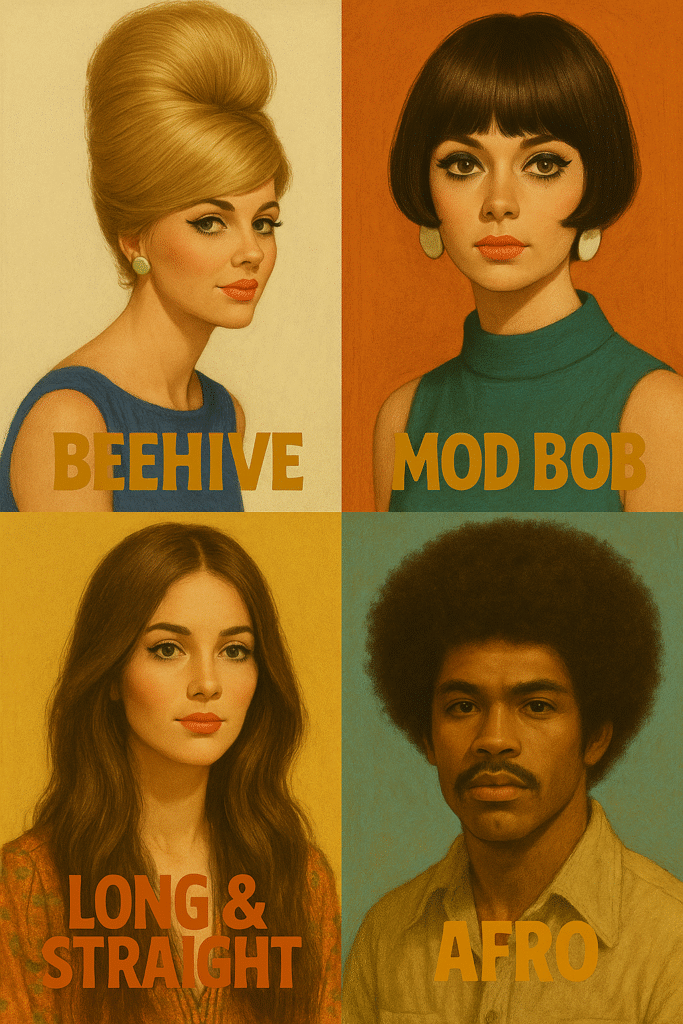
As the counterculture gained prominence, so did the natural look. Influenced by the hippie movement and a desire for authenticity, many women let their hair grow long and free-flowing. Natural waves, center parts, and minimal styling became both a fashion statement and a political one—rejecting the rigidity of post-war femininity in favor of organic self-expression.
On the male side, 1969 marked a notable departure from the slicked-back, clean-cut styles of earlier decades. The shaggy hairstyle—defined by layers, movement, and length—became synonymous with rock stars and free thinkers. The Beatles, who had begun the decade with tidy mop tops, were now growing their hair longer and looser, influencing fans across the globe to do the same.
The Afro also surged in popularity during this period, particularly within the African American community. Worn with pride by figures like Angela Davis and The Jackson 5, the Afro was more than a hairstyle—it was a political statement, an assertion of cultural identity, and a challenge to Eurocentric beauty standards.
Collectively, these styles reflected a time of radical freedom and personal redefinition. Whether styled high or worn loose, every strand spoke volumes.
The Influence of Global Movements and Music on Hairstyles
Few cultural forces in 1969 had as much impact on hair as music and social movements. The hippie movement, at its peak in ’69, championed naturalism, anti-establishment ideals, and a return to simpler living. This ethos translated directly to hair. Long, uncut, unstyled locks were symbols of peace, resistance, and authenticity.
Woodstock, the defining music festival of the era, is often used as a visual reference point for 1969 style. Attendees—many of whom rejected traditional grooming entirely—embodied a new ideal of beauty: organic, unkempt, and genuine. Hair was worn loose, adorned with flowers, bandanas, or left untouched. This casual approach was both a fashion decision and a cultural alignment.
Musicians themselves became fashion icons. The Beatles’ evolving hairstyles, particularly John Lennon’s and George Harrison’s long, wavy hair and beards, inspired legions of fans to follow suit. Jimi Hendrix added a psychedelic flair with his untamed Afro and headbands, while Janis Joplin’s wild curls were part of her bohemian mystique.
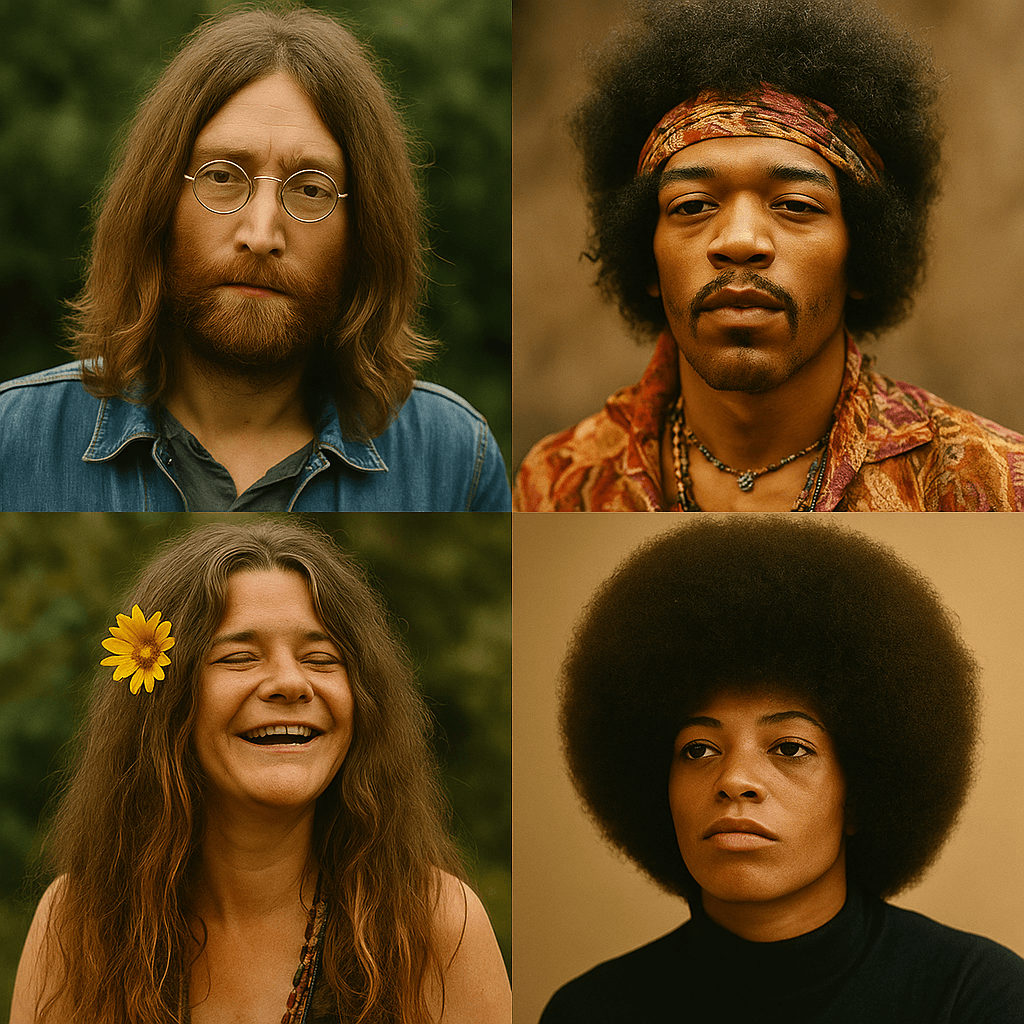
The Black is Beautiful movement had a profound effect on African American hair. The embrace of natural textures and the rejection of straightening became deeply political. The Afro wasn’t just fashionable—it was revolutionary. Activists and artists used hair as a means of reclaiming cultural identity and challenging societal norms.
Hair became a canvas for political and personal expression, and 1969 solidified that idea in the cultural consciousness. Grooming was no longer about fitting in—it was about standing out and standing up.
Lasting Impact: How 1969 Hairstyles Influenced Modern Trends
More than five decades later, the hairstyles of 1969 continue to shape the way we approach beauty, identity, and self-expression. The styles of that pivotal year remain relevant not only in nostalgic retrospectives but in the runways, red carpets, and street fashion of today.
The revival of vintage styles—from the beehive and the bob to natural waves and textured Afros—has re-emerged time and again, often with a modern twist. Contemporary stars like Adele, Rihanna, and Zendaya have all channeled 1960s-inspired looks, blending classic volume with current-day aesthetics.
The shag haircut, revived in countless iterations, remains a go-to style for those seeking a lived-in, rocker-chic vibe. Celebrities like Taylor Swift, Billie Eilish, and Florence Welch have embraced this effortlessly cool aesthetic—directly descended from the Beatles, Mick Jagger, and their contemporaries.
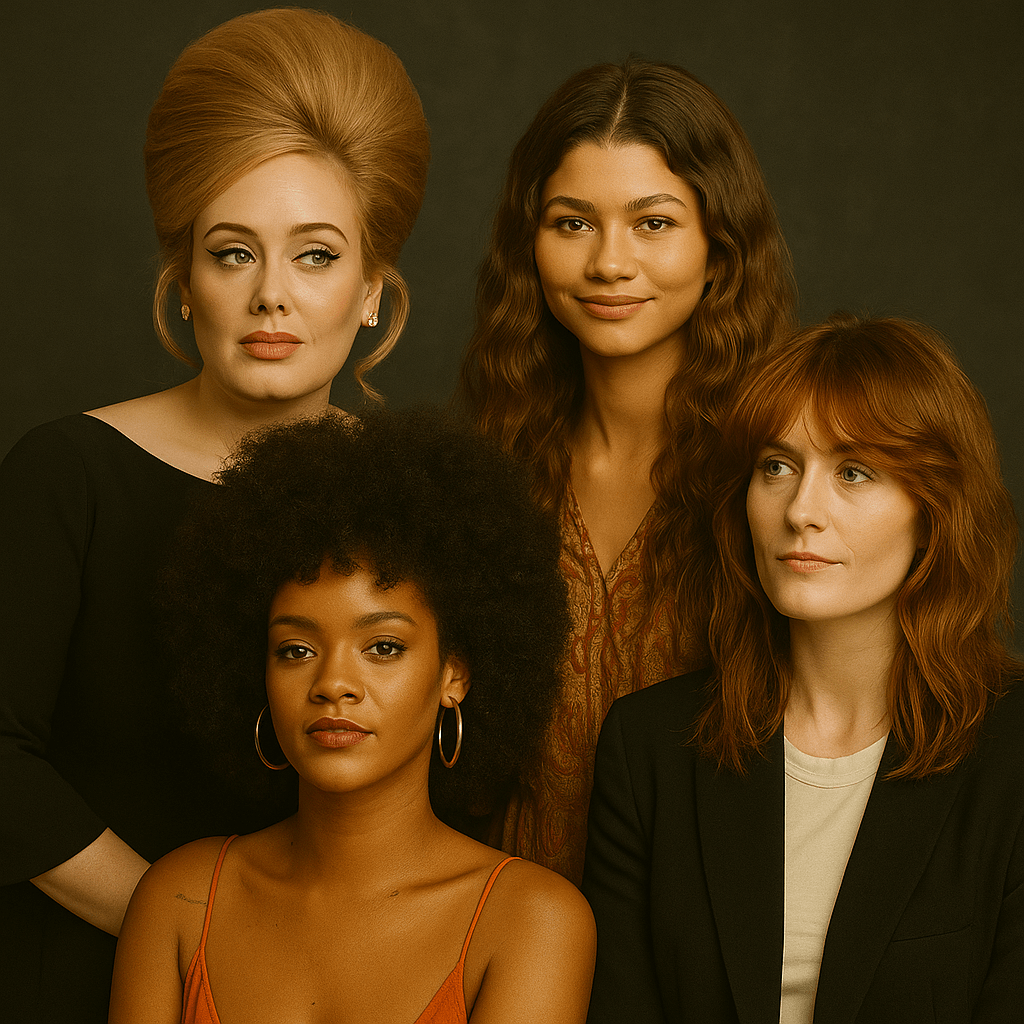
On runways, fashion designers frequently reference late ’60s beauty, using retro styles to evoke mood, rebellion, and elegance. Shows from brands like Gucci, Marc Jacobs, and Prada have featured throwback hairdos that reimagine the volume, shape, and texture of 1969 in bold, forward-looking ways.
Even in everyday styling, we see the lasting impact of 1969’s hairstyling ethos. Embracing natural texture, celebrating volume, and using hair as a form of self-expression are now embedded in mainstream beauty culture. Movements advocating for curly hair acceptance, natural hair rights, and anti-discrimination laws (like the CROWN Act) draw a direct line back to the cultural groundwork laid in the late 1960s.
Nostalgia, in part, fuels this resurgence. In a world saturated by digital trends, people often look to the past for authenticity and inspiration. The year 1969, rich with meaning and movement, offers both.
Most importantly, the hair trends of that year serve as a reminder: beauty is political, personal, and ever-evolving. What we choose to do with our hair reflects who we are, where we come from, and what we believe in.
Conclusion: A Legacy Worn on Our Heads
The evolution of hairstyles in 1969 was about far more than aesthetics—it was about breaking free, redefining norms, and making statements that resonated across culture and time. In a year marked by revolution, activism, and artistic innovation, hair became a living, breathing expression of change.
Today, those same styles continue to inspire. Whether through fashion retrospectives, modern revivals, or continued advocacy for inclusivity and self-expression, the hairstyles of 1969 endure—not as trends, but as touchstones of a moment when the world dared to change.
✨ Want to See the Bigger Picture of 1969?
Hairstyles were just one piece of a much larger cultural shift. For a deeper look into the events, icons, and movements that defined the year, check out our in-depth book review of 1969 – The Year Everything Changed by Rob Kirkpatrick.
📖 Read the Review