In August 1969, a dairy farm in Bethel, New York, transformed into the epicenter of a cultural revolution. The Woodstock Music & Art Fair, initially envisioned as a modest gathering, evolved into a monumental event that epitomized the spirit of an era. Over four days, more than 400,000 individuals converged to celebrate music, peace, and unity, leaving an indelible mark on history.
🛠️ The Genesis of Woodstock: A Vision for Peace and Music
By 1969, the United States was caught in the throes of massive societal transformation. The Vietnam War had become increasingly unpopular, the Civil Rights Movement was confronting centuries of injustice, and the youth of America were actively rebelling against the status quo. A new counterculture was blossoming—one rooted in ideals of peace, free expression, environmentalism, and love. It was in this highly charged atmosphere that four young visionaries—Michael Lang, Artie Kornfeld, John P. Roberts, and Joel Rosenman—hatched a bold idea.
Initially conceived as a business venture to build a recording studio in Woodstock, New York, their plans evolved into something far more ambitious: a three-day music festival that would bring together the most influential musicians of the time and serve as a peaceful gathering for the country’s disillusioned youth. More than just a concert, it would be a statement of cultural defiance and artistic liberation.

The original venue, a site in Wallkill, New York, backed out just weeks before the event due to public outcry and concerns over the large crowd. With time running out, the team found a willing partner in Max Yasgur, a dairy farmer in the rural town of Bethel, New York. Yasgur offered his 600-acre field, a gesture that proved pivotal in turning a chaotic scramble into a cultural milestone.
Despite immense logistical challenges—ranging from food and water shortages to gridlocked traffic and incomplete staging—Woodstock Ventures pressed on. The festival was eventually held from August 15 to 18, 1969, and instead of the expected 50,000 attendees, more than 400,000 people showed up, turning Woodstock into the largest peaceful gathering of its kind in history. What began as a dream became an enduring symbol of peace, music, and countercultural solidarity.
🎶 The Highlights of Woodstock: Music that Echoes Through History
Woodstock’s magic was not just in the crowd or the message—it was in the music. Across four muddy, chaotic, and unforgettable days, 32 legendary acts took the stage, creating a soundtrack that would define a generation. It wasn’t just a music festival—it was a pilgrimage, and the artists who performed became its prophets.
Perhaps no moment better encapsulates the cultural and political turmoil of the time than Jimi Hendrix’s electrifying rendition of “The Star-Spangled Banner.” With distorted riffs mimicking bombs and sirens, Hendrix transformed the national anthem into a raw, emotional protest against war and injustice. Despite playing on Monday morning to a thinned crowd, his performance has become one of the most enduring and analyzed musical statements of the 20th century.
Janis Joplin, with her raspy voice and emotional intensity, delivered a soul-baring set that cemented her status as a counterculture icon. Her rendition of “Ball and Chain” sent chills through the audience, reflecting the vulnerability and rebellion of the era.
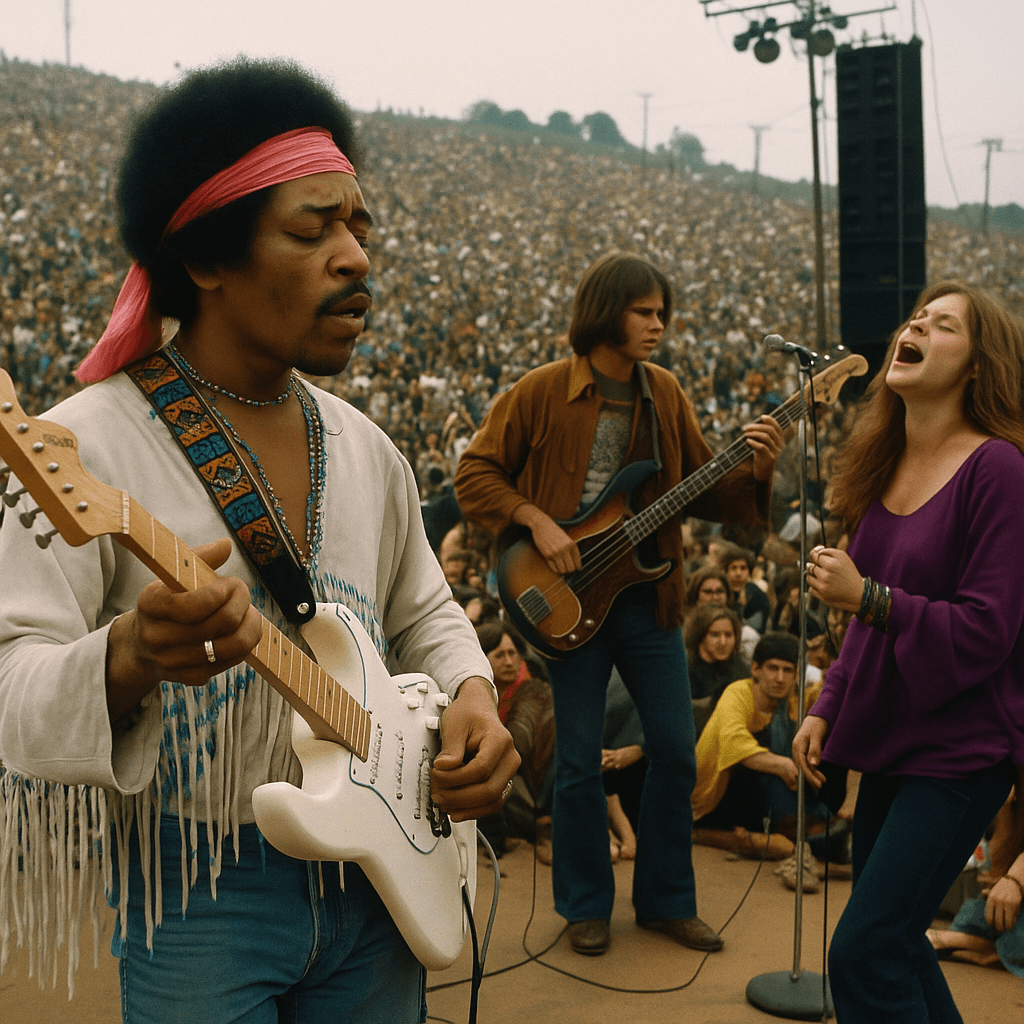
The energy peaked when The Who launched into their groundbreaking rock opera “Tommy,” turning the muddy fields of Bethel into a cathedral of sound. Santana’s now-legendary “Soul Sacrifice” introduced Latin rock to the mainstream, while Joe Cocker’s passionate cover of “With a Little Help from My Friends” became a crowd-chanting anthem.
Also making history was Crosby, Stills, Nash & Young, who delivered a hauntingly beautiful debut performance. It was their second-ever live gig as a quartet, and their harmony-laden songs offered a moment of clarity and peace amid the weekend’s frenzy.
Despite constant rain, food shortages, and primitive equipment, the music was transcendent. It was raw, unpredictable, and deeply human—fueled by the same spirit of rebellion, idealism, and hope that had brought hundreds of thousands to that muddy field. Each performance wasn’t just a set—it was a statement. And 55+ years later, they’re still echoing.
🌎 Woodstock’s Societal Impact: More Than Just Music
While Woodstock is often remembered for its legendary performances, its deeper legacy lies in its profound societal and cultural impact. The festival served as the spiritual epicenter of the 1960s counterculture, capturing the essence of a generation disillusioned by war, systemic injustice, and materialism. At a time when the Vietnam War was raging and civil unrest echoed in city streets, Woodstock became a living, breathing protest—a peaceful revolution set to music.
What made Woodstock extraordinary wasn’t just who played, but how 400,000 people coexisted peacefully in difficult conditions. Despite shortages of food, water, sanitation, and shelter, there were no riots, no violence—only a shared sense of purpose and humanity. In a country increasingly divided, Woodstock became proof that a different kind of society was possible, if only temporarily.
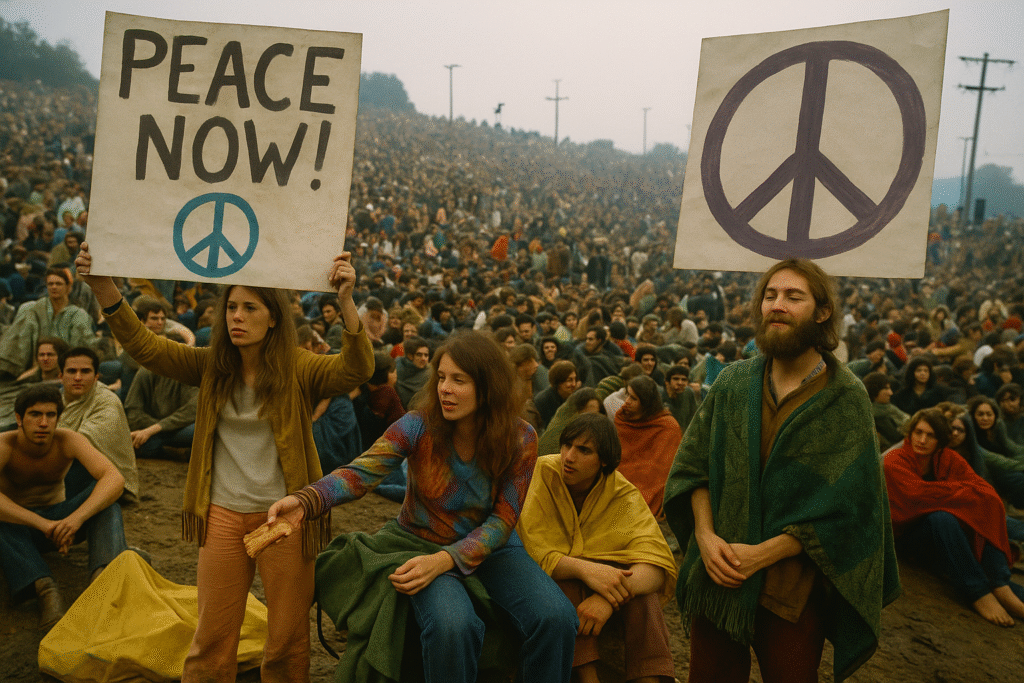
The festival challenged media portrayals of the so-called “hippie generation” as unruly or aimless. Instead, it showcased a movement grounded in values—peace, unity, and respect for others and the Earth. The cooperation shown among attendees, who shared supplies and looked out for one another, painted a picture of a community bound by ideals rather than law or order.
Moreover, Woodstock redefined the future of live events. Its success and symbolism inspired a wave of socially conscious festivals, including Glastonbury in the UK and Earth Day concerts in the U.S. The idea of a music festival as not just entertainment, but a platform for social change and cultural identity, was born in Bethel, New York.
For many who were there, the real story of Woodstock wasn’t on the stage—it was in the crowd. The stories they tell speak of unity, freedom, and a belief in a better world. Woodstock wasn’t perfect, but for one muddy weekend, it offered a vision of what could be.
🌱 The Legacy of Woodstock: Lessons for Future Generations
More than five decades later, the legacy of Woodstock continues to ripple through culture, music, and the collective consciousness. Far from being a one-off gathering, Woodstock has become a timeless symbol of peace, artistic freedom, and generational unity. It stands as a cultural landmark not only for what happened on stage, but for what it represented: a hopeful vision of society built on shared ideals, rather than social conformity or political obedience.
Woodstock’s story lives on through award-winning documentaries like “Woodstock” (1970), scholarly analyses, and countless retrospectives that dissect its influence on music history and social movements. It set a standard for what a music festival could be—not merely a commercial venture, but a transformative cultural event with real-world implications. Festivals like Coachella, Bonnaroo, and Glastonbury all owe part of their DNA to the original Woodstock, often borrowing its ethos of inclusivity, artistic exploration, and community.
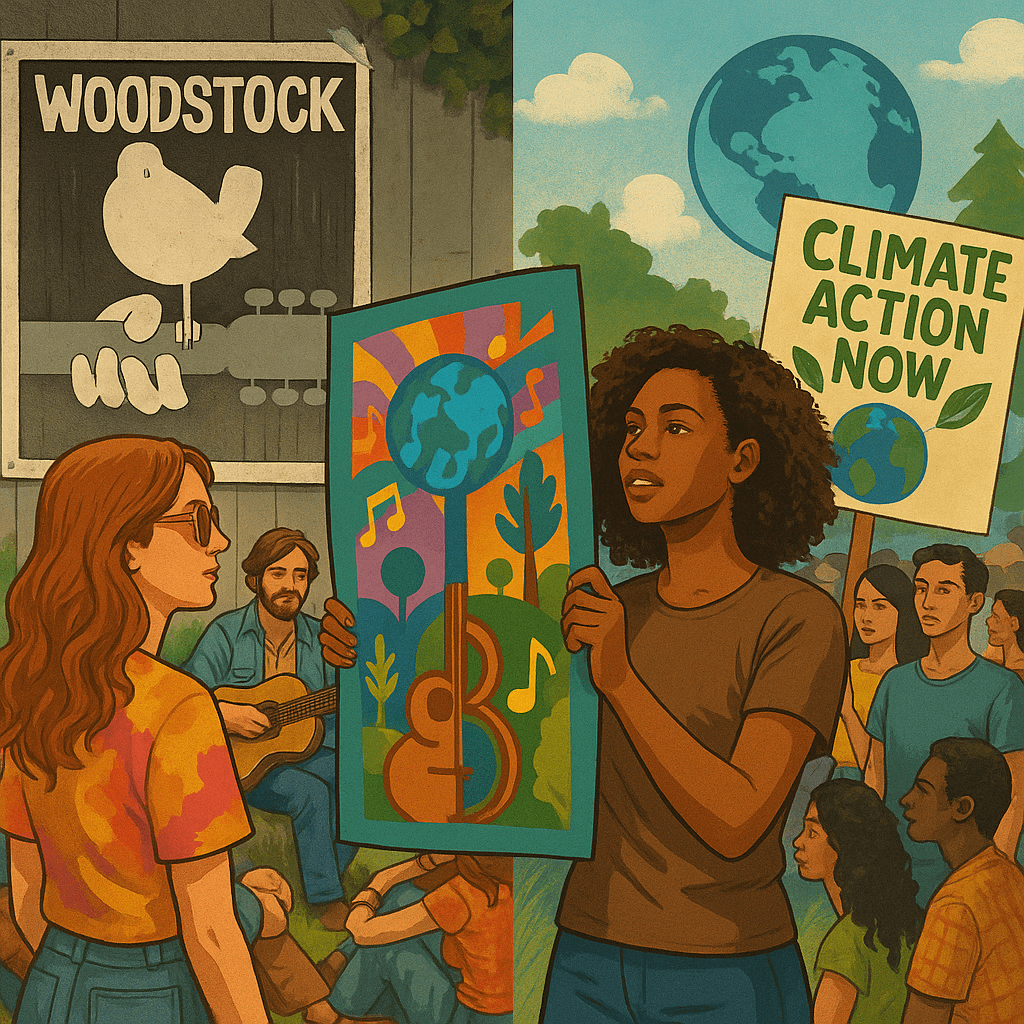
Importantly, Woodstock’s message has transcended music. Its focus on peace, environmental harmony, and grassroots organization continues to influence activism, particularly among younger generations. From climate marches to music-driven humanitarian causes, the festival’s principles echo in modern calls for equity, sustainability, and creative liberation.
Artists, too, remain inspired by Woodstock’s raw authenticity and cultural relevance. Many cite it as a pivotal influence on their work, whether in fashion, music production, or political art. The festival’s aesthetics—from tie-dye and fringe to psychedelic poster art—have become shorthand for countercultural ideals and 1960s nostalgia.
In the end, Woodstock is more than a cherished memory—it is a cultural compass. As society grapples with new divisions and existential challenges, Woodstock serves as a reminder of what’s possible when people unite around music, shared values, and the dream of a more harmonious world. Its legacy is not just in the past—it’s a blueprint for the future.
What Did Woodstock Mean to You?
Share your thoughts, stories, or questions in the comments below — let’s keep the spirit of ’69 alive through conversation. ✌️
📚 Read: *1969 – The Year Everything Changed*